
Peru
Democracy and Governance
Training newly-elected mayors to strengthen local governance in Peru
Impact
News and Insights
The Cameroonian association Social Broker has piloted "TontineRe", a reinsurance product for financial associations known as "tontines", to cede part of their risk, thus improving the social insurance cover offered to their members. With an initial preparatory grant, awarded by FID in 2022, Social Broker conducted a preliminary study and designed its product. The association then obtained a second stage-1 grant to trial the project under real-life conditions with 80 tontines.
Project led by:


The national health and social insurance systems in many developing countries are not fit for purpose, largely because of difficulties with collecting contributions from the informal sector, which has a negative impact on their productivity. As a result, many informal sector workers rely on financial associations, known as "tontines", to provide a certain level of protection against unforeseen events in their lives (such as poor health, fire, or funerals). These tontines are based on an emergency fund system organized by a mutualist community. The emergency fund operates by setting up an initial fund which is topped up with additional capital payments from members in accordance with statutes. The preliminary study conducted by Social Broker during the preparatory phase confirmed that, due to the small size of tontines, members are often required to pay high and unpredictable premiums. When there is a rise in the number of events covered by a tontine, the most vulnerable members are left unable to meet their contribution obligations, exposing them to exclusion or enforced recovery sanctions. The study revealed that, on average, two in every 32 tontine members were in default of their emergency fund payments. In close to 70 percent of tontines, members in default of payment are subject to exclusion or enforced recovery sanctions. Furthermore, due to the unpredictability of member contributions, tontines are forced to prioritize cover for events that can be easily verified (such as deaths) but offer less protection for hospitalizations, births, and fires.
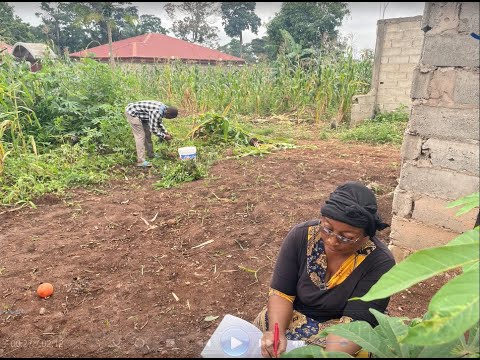
Social Broker worked in partnership with Assurance Universelle du Golfe and OptiSolutions to develop the "TontineRe" insurance product, which offers tontines subsidized reinsurance contracts that provide support with financing, stabilization, underwriting, and management.
In practical terms, TontineRe is transforming the current tontine system, which involves making frequent payments to top-up the social fund (also called an emergency fund), by replacing it with an insurance scheme based on fixed premiums. TontineRe therefore assumes all or part of the risk underwritten by the tontines for their members via their emergency fund, in exchange for the payment of reinsurance premiums.
The long-term goal is to establish a more inclusive financial model for risk protection, while limiting the exclusion of members in default, and reducing inequalities in the annual contributions paid under the traditional social protection system for the informal sector.
Another expected positive outcome is that subscribing to TontineRe will establish a formal system, facilitating needs assessment and support for informal tontines that have previously offered a rudimentary form of social protection. Subscribing to TontineRe thus gives tontines greater legitimacy, giving their members better protection in light of the unpredictability of the events covered and the variable income of informal sector workers.

With an initial grant awarded in the project's preparatory phase in 2022, Social Broker conducted a unique preliminary study on a sample group of 241 tontines in the city of Douala, Cameroon, to better understand their operating methods and how emergency funds work, define their risk profile, and refine its insurance product.
It developed a master plan and the required tools (forms) around the customer experience and ran successful tests before the pilot launch.
The additional financing aimed to implement TontineRe in 80 tontines in the city of Douala (see our article on the launch) and to test its operational functionality under real-life conditions (acceptability, fluidity of procedures, levels of membership and compensation).
**The results from this pilot phase are encouraging (see the final implementation report), in terms of tontine subscriptions as well as compensation, costs and marketing options: **
The formal event reporting procedures were also an improvement compared to the informal tontine model (sworn statement for each event reported, doctor's signature for cases involving hospital care, peer pressure).
The pilot has demonstrated TontineRe's potential to reduce cases of exclusion among the most financially vulnerable groups. It appears to have confirmed the scheme's stabilizing effect, allowing groups and individuals to better plan for the future as a result of more stable and predictable member payments. The feasibility study, as well as the study conducted during the pilot, has shown that the cost of topping-up tontines under the traditional scheme always exceeds that of tontines operating under the fixed-premium model (TontineRe) by 12.8% to 91.5% (calculated using standard deviation). These percentage variances are interpreted as reflecting the first approximation of the stabilizing effect on premium contributions.
A risk categorization system was also established during the pilot phase: exceptional (e.g., death) versus recurring (health, births) events, and fatal versus productive and socially beneficial events (health, civil status). This revealed that the current tontine system places higher value on exceptional risks (death) than recurring risks, and therefore could be improved through policies that incentivize allocating more resources to productive and socially beneficial risks.
In June 2025, a commercial partnership agreement was signed with Sanlam-Allianz, Africa's largest non-banking financial and insurance services group, to market TontineRe across the country. Having recently undergone a merger, the Group is looking for opportunities to increase penetration of the insurance market in Africa through the right combination of financial stability, scale, new technologies, and a tangible commitment to customers.
Under the agreement, Sanlam Allianz Cameroon (SAZ-CMR) will oversee all the regulatory coverage and the approval of TontineRe, and provide all the support and commercial assistance needed to meet the product's distribution targets. In particular, SAZ-CMR will draw on its network of over 160 sales representatives and its four agencies across Cameroon. Over the next five years, the product is projected to reach around 3,000 tontines, representing approximately 96,000 members and 672,000 affiliates.
Projects
Projects funded by FID
Peru
Democracy and Governance
Training newly-elected mayors to strengthen local governance in Peru

India
Democracy and Governance
Strengthening the political agency of women elected to local government in India

Mexico
Women-men equality
Changing perpetrators' behavior to prevent violence against women in Mexico