
Peru
Democracy and Governance
Training newly-elected mayors to strengthen local governance in Peru
Impact
News and Insights
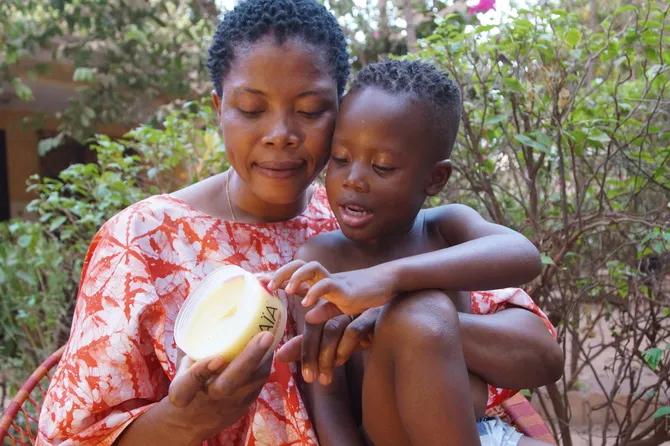
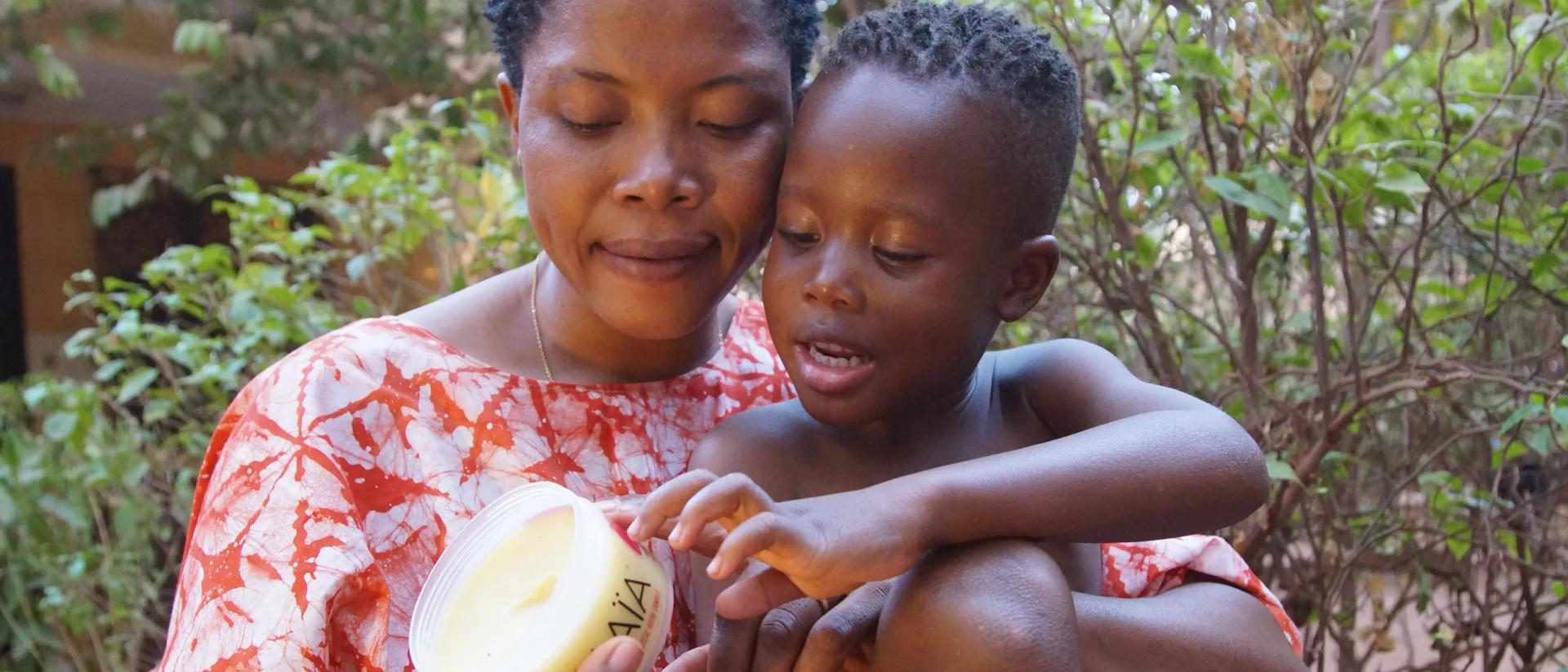
MAÏA® is a mosquito-repellent balm designed and developed by the social enterprise MAÏA Africa SAS. Following a first evaluation phase conducted in Burkina Faso, the project is entering a new research phase which aims at generating evidence of impact on the balm's effectiveness in reducing malaria cases among children.
Project led by:
In Sub-Saharan Africa, malaria remains one of the deadliest diseases, affecting children and pregnant women in particular. According to the WHO, the African region accounted for 94% of malaria cases worldwide in 2024, and 95% of deaths (WHO, 2025). According to the latest World Malaria Report, the disease continued to spread in 2024, with 282 million cases recorded — an increase of nearly 9 million compared with 2023. Deaths also rose, from 598,000 to 610,000 over the same period (WHO, 2025). Beyond its health toll, malaria's economic impact is estimated at $12 billion a year for the African continent.
Insecticide-treated nets (ITNs) and indoor residual spraying (IRS) remain the two vector control methods recommended by the WHO, together responsible for 78% of the 663 million clinical cases avoided over the past 15 years. Since 2023, two malaria vaccines have also become available, recommended by the WHO as part of a combined approach to interventions, particularly for young children. However, growing resistance to insecticides is reducing their effectiveness, and studies show that up to 10.6 million additional cases a year could be linked to outdoor transmission, despite widespread use of ITNs and IRS.
MAÏA® is a mosquito-repellent balm designed and developed in Burkina Faso, complementary to insecticide-treated nets.
Phase 1 (March 2022 – January 2024) – Evaluating adoption and willingness to pay (Burkina Faso)
Led by Innovations for Poverty Action in partnership with Université Paris Dauphine-PSL and the Institut de Recherche pour le Développement, the first phase of the study assessed:
FID's funding allowed:
Innovations for Poverty drew on survey data collected from 3,120 households with at least one young child, across 195 points of sale covering 4 regions, 6 provinces, and 24 municipalities in Burkina Faso.
Phase 2, ongoing – Generating epidemiological and entomological evidence (Côte d'Ivoire)
Led by the London School of Hygiene and Tropical Medicine in partnership with the Institut Pierre Richet, the second phase aims to generate evidence on MAÏA®'s effectiveness in reducing malaria cases among children, in an area of moderate-to-high transmission near Bouaké, Côte d'Ivoire. It is built around three complementary components: epidemiological effectiveness, entomological impact, and social and economic evaluation.

The randomized evaluation was conducted in 195 points of sale across 4 regions, 6 provinces, and 24 municipalities, among 3,120 households with at least one young child. Households were randomly assigned to three treatment groups, based on the subsidy applied to the price of MAÏA® (free, 50% subsidized, and full price).
The results have shown strong and increasing product take-up: reported use of MAÏA® in the last 30 days increased from 57% one month after launch to 73% at the end of the rainy season.
This pricing had a significant impact: households that were given the product for free used the ointment three times more than those paying full price, and the group that received a 50% subsidy used it twice as much. In addition, free access to the product did not lead to waste, as close to 90% of households that were given MAÏA® for free actually used it, compared to 70–75% among the other groups.
The study confirmed that MAÏA® can be used in combination with treated mosquito nets: 75% of households continued to use them during the project, and close to 10% still used conventional mosquito nets, irrespective of the group. However, the use of mosquito-repellent coils and spirals decreased, with households gradually replacing these solutions with the ointment. The ointment was primarily used on vulnerable people in the household, with priority given to children in households where financial constraints were an issue.
Finally, the results of this evaluation were promising in terms of long-term use: one year after the trial had ended, 60% of households that were given MAÏA® for free continued to use the product, compared to just over 20% in the groups paying full price or with a 50% subsidy. These results suggest that an initial subsidization period could promote long-term take-up and thus create ongoing demand.
The results of Phase 2, complementing those of Phase 1, should establish whether MAÏA® can be recognized as a stand-alone malaria prevention tool, complementary to existing interventions.
By generating robust epidemiological and entomological evidence in the Ivorian context, the study aims to demonstrate and document the impact on malaria incidence in children and provide the data needed to inform public policy recommendations.
Phase 1:
Phase 2:
Projects
Projects funded by FID
Peru
Democracy and Governance
Training newly-elected mayors to strengthen local governance in Peru

India
Democracy and Governance
Strengthening the political agency of women elected to local government in India

Mexico
Women-men equality
Changing perpetrators' behavior to prevent violence against women in Mexico