
Peru
Democracy and Governance
Training newly-elected mayors to strengthen local governance in Peru
Impact
News and Insights
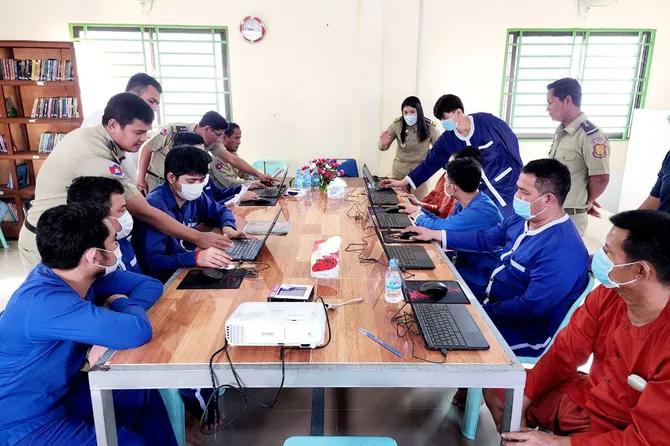
The NGO Sipar, in partnership with the Directorate General of Prisons and the Ministry of Education, Youth and Sport, is developing multimedia educational services in Cambodian prisons by converting prison libraries into Multimedia Educational Centers (Centres Éducatifs Multimédias — CEM). A pilot phase funded by FID, carried out in seven prisons, tested this model. The project is now entering a new phase, supported by FID through its Innovation and Public Policy grant, with the added support of the Ministry of Social Affairs and Eval-Lab. The program is being extended to seven new prisons and one youth rehabilitation center, and its implementation is being progressively transferred to the Ministries with a view to national institutionalization.
Project led by:

Prisoner numbers in the 28 prisons in Cambodia totaled more than 61,000 in January 2026, including 3,970 women, compared to 15,000 ten years ago (Directorate General of Prisons data). It has the second highest prison occupancy level in the world, at 400% of capacity, behind the Democratic Republic of Congo (LICADHO, 2025). Drugs are involved in more than half of offenses, with a national anti-drug trafficking campaign introduced in 2017 (IDPC, 2024).
The educational aspect is particularly important when considering prisoner profiles: most of the prison population is young and from socioeconomically disadvantaged backgrounds, and more than half those incarcerated have only completed elementary school (Directorate General of Prisons). In addition, about 275,000 people's lives are affected by a family member being in prison, which aggravates circumstances for households that are already struggling.
While Cambodia passed a correctional law in 2011 aimed at moving from a purely punitive approach toward rehabilitation, and while the UN Nelson Mandela Rules (2015) made access to education in detention an obligation, no structured national program has yet been implemented.
Phase 1 (2023–2025)
The core innovation consists of converting the libraries of seven prisons — in Phnom Penh, Pursat, Kampot, Kandal, Koh Kong, and Prey Veng — into Multimedia Education Centers, by installing a digital lab of eight computers connected to an offline server, allowing each prisoner to access interactive content through a personal account, without an internet connection.
The design of the educational model drew on a survey of 908 prisoners, conducted with support from the Cambodian Development Resource Institute (CDRI), and rests on two key principles: personalizing each learner's pathway according to length of detention, level of education, and vocational aspirations, and organizing content into short modular sessions (videos, interactive tests, printed materials, group work). This flexibility is essential given the high turnover of prison populations.
Four learning modules were structured:
Supervision is provided through an internal tutoring system: ten trained correctional officers and seven volunteer prisoners support learners on a daily basis. FID funding enabled the purchase and installation of digital and audiovisual equipment, as well as training for correctional officers and external instructors responsible for supervision.
Phase 2 (2026-2030)
The objective of this second phase lies above all in the institutional transfer model: over three years, operational and budgetary management of the Multimedia Educational Centers is progressively being handed over from Sipar to the Directorate General of Prisons and the Ministry of Education, Youth and Sport, based on jointly developed management manuals and terms of reference covering six functions (technical, monitoring and evaluation, coordination, pedagogical, logistical, and financial).
With support from the Cambodian Development Resource Institute and Eval-Lab, a learning agenda is being set up to gain a better understanding of the barriers to post-release employment and the factors behind recidivism. An evaluation will be carried out to compare outcomes between a prison equipped with a Multimedia Educational Center and an unequipped prison, looking at detainees' skills, mindset, readiness, self-confidence, and reintegration plans. A pilot mechanism to track detainees after their release is also being tested, in coordination with the Ministry of Interior, local authorities, and employment agencies, in order to prepare a future impact evaluation on reintegration and recidivism. Finally, new modules will be developed, including 18 social skills modules that will be integrated into the Directorate General of Prisons' national release-preparation program.

At the end of December 2025, 713 prisoners, including 112 women (15%), benefited from CEM programs in the seven pilot establishments.
Among them:
Three key insights emerge from this pilot phase:
The project aims to reach between 5,400 and 10,800 additional beneficiaries across the 15 centers. By the end of the phase, the Directorate General of Prisons and the Ministry of Education, Youth and Sport should be able to manage and co-finance the program independently, with the program incorporated into their 2029–2034 strategic plans and respective budgets. The evaluation and the pilot post-release tracking mechanism should also lay the groundwork for a future impact evaluation on recidivism and reintegration, with a view to scaling up the model to all 29 prisons in the country by 2034.
©Sipar
Projects
Projects funded by FID
Peru
Democracy and Governance
Training newly-elected mayors to strengthen local governance in Peru

India
Democracy and Governance
Strengthening the political agency of women elected to local government in India

Mexico
Women-men equality
Changing perpetrators' behavior to prevent violence against women in Mexico