frPropose a project

Hairdressers as ambassadors for mental health in Togo

Progress stage
Oct 2024 to Sep 2028
  • Togo
  • Health
  • Oct 2024 to Sep 2028

Bluemind Foundation has launched an innovative initiative to help improve women’s mental health in West Africa by training a network of hairdressers to act as therapeutic first responders, serving as a first point of contact in the mental health care system. Following a pilot project implemented in Côte d’Ivoire, Cameroon and Togo, the program has now been extended to Togo with the backing of the Ministry of Health and WHO-Togo.

Project ported by:

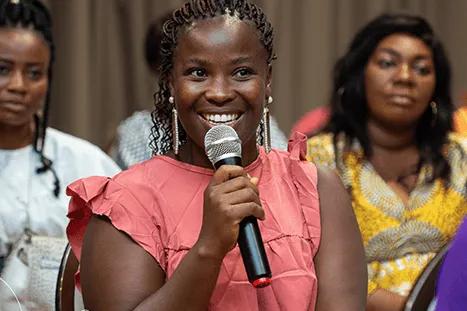
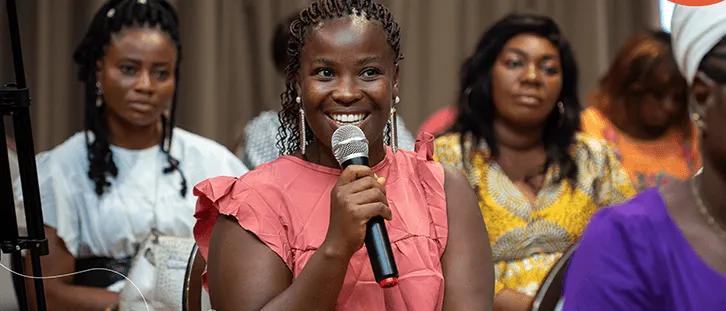
Une femme du public prend la parole pendant une session de présentation de Bluemind FoundationUne femme du public prend la parole pendant une session de présentation de Bluemind Foundation

Context

According to the World Health Organization, nearly 150 million people in Africa are living with mental health conditions (WHO, 2025). The vast majority of those affected receive no treatment or care, primarily due to insufficient services, a lack of awareness, and the stigma around these wide-ranging and often misunderstood disorders. Most African countries have one psychiatrist per 500,000 people on average (compared with one per 5,000 people as recommended by the WHO), and only one in five African countries has an official mental health policy.

Bluemind Foundation conducted a pilot survey of 786 women who visit hairdressers in three districts of Abidjan, with seven out of ten respondents stating that they confide in their hairdressers at least "occasionally". What's more, women's hair is often associated with health and well-being (Holmes, 2010; Mbilishaka, 2018; McCann & Myers, 2021). With proper training, hairdressers can become advocates for mental health awareness, while helping to break the taboos and stigma around these conditions.

Hairdressers as ambassadors for mental healthcare

Innovation

Heal by Hair program trains hairdressers to become therapeutic first responders by teaching them to identify early warning signs, and to recognize when a pre-existing condition may be getting worse. They also learn active listening skills and when to refer clients struggling with mental health to designated professionals. Drawing on the Mental Health Gap Action Program (mhGAP) guideline published by the World Health Organization, this three-day training course is delivered in person and covers active listening, early signs of mental health disorders, prevention of gender-based violence, as well as confidentiality and professional ethics. Monthly support is also provided over six months, designed to help ambassadors apply these practices in their daily work, with access to online resources and additional sessions for those who have already been certified.

With funding from FID, this program is being implemented in two phases:
  • The pilot phase (2022–2024), conducted in three cities, Abidjan, Douala and Lomé , which served to test and validate the model – including the training curriculum, session format, and participant selection process – as well as to certify hairdresser ambassadors and lay the groundwork for an initial qualitative and quantitative evaluation.
  • The impact evaluation phase (2024 – 2028), focusing on Togo, which aims to further develop the model, based on the results of a randomized impact study conducted in partnership with an academic team and led by researchers Björn Nilsson and Adrien Bouguen, with support from Innovation for Poverty Action (IPA). A structured post-training monthly support program, over six months, has been introduced during this new phase, designed to help ambassadors incorporate these practices into their daily work, with access to online resources and additional sessions for those already awarded certification. Peer support groups, called the Heal by Hair Circles, have also been set up for clients identified as experiencing difficulties by the ambassador hairdressers.
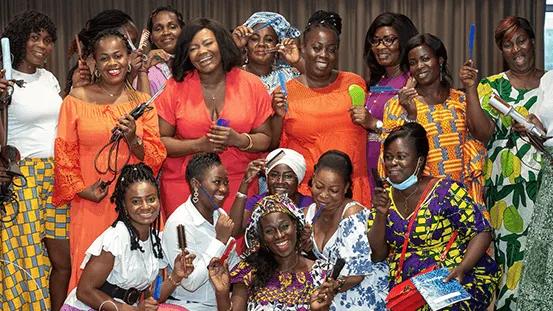
Marie-Alix de Putter, présidente de la Bluemind Foundation, entourée de coiffeuses ambassadrices pour la santé mentale

Results and lessons learned from phase 1

One year after the first training courses were delivered, a qualitative study was conducted in Abidjan, Douala and Lomé, as well as a quantitative pilot evaluation of the training sessions in Abidjan. Of the 178 hairdressers who completed the training, 152 were awarded certification, demonstrating strong engagement with the program. A quantitative survey was also conducted in Abidjan among 247 hairdressers.

The following outcomes were noted:

  • Clients of the trained hairdressers said they felt significantly more optimistic, energetic and at ease with themselves after their conversations in the salon. The qualitative interviews revealed a change in approach among hairdresser ambassadors: they are now practicing active listening and emotional management techniques, and feel more confident in communicating with their friends and family, as well as their clients.
  • The trained hairdressers reported improved personal fulfillment, increased social support and a stronger sense of control over life events than hairdressers who had not taken the training – demonstrating the program's direct and positive impact on their own mental health that goes beyond their ambassador role with clients.

There are two key takeaways from this pilot phase:

  • Attrition rates should be taken into account when interpreting the results of this initial study, having been affected by several factors identified during the pilot phase that could be improved upon: organized transport, compensation for days away from the salon and no contractual commitment upon selection. These improvements will be incorporated into a more robust protocol for wider scale-up.
  • There appears to be a higher risk of depression (PHQ-9 index) among trained hairdressers and clients – which may initially seem counter-intuitive. However, this is interpreted as their increased awareness and ability to talk about the signs of depression, rather than an actual deterioration in their mental health, raising questions about the viability of the psychometric tools used.

Building on these results, an impact assessment will examine how to scale this impact and improve these measurement tools.

    Photo credits: © Bluemind Fondation

    Marie-Alix de Putter, présidente de la Bluemind Foundation, entourée de coiffeuses ambassadrices pour la santé mentale
    Bluemind Foundation

    Bluemind Foundation

    Bluemind Foundation is an international non-profit organization founded in July 2021 by Marie-Alix de Putter and women from the Ivorian diaspora. The organization is managed by three committees, which are composed of several mental health experts in different african contexts.

      Projects

      Projects funded by FID

      Discover all the projects