
Peru
Democracy and Governance
Training newly-elected mayors to strengthen local governance in Peru
Impact
News and Insights
The local NGO Nuru Ethiopia and Health[e]Foundation are working on a project to improve maternal and child health in Ethiopia through online training and a digital application. The study funded by FID will allow to combine both programs and learning approaches.
Project led by:
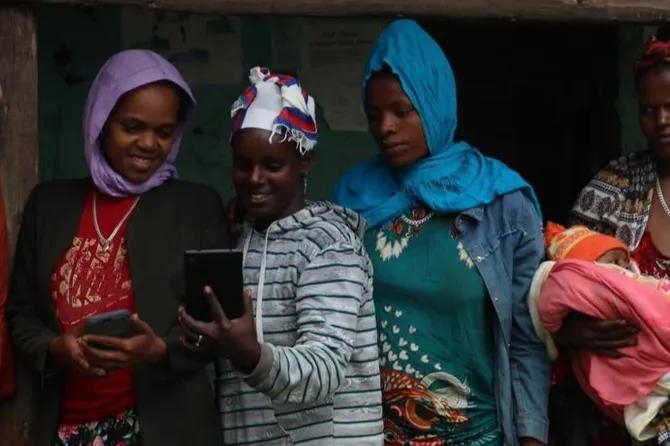
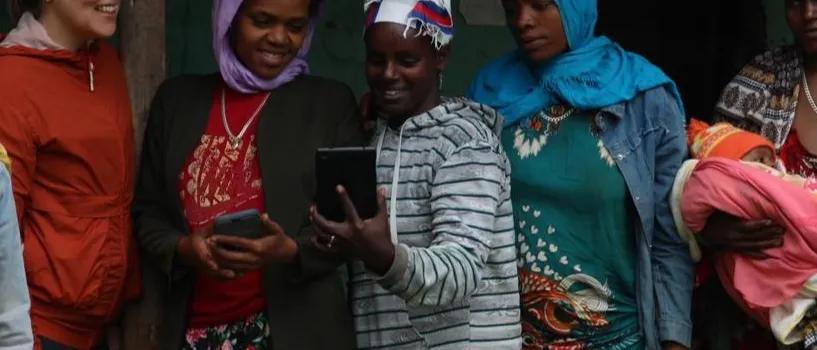
To improve access to health services, the Ethiopian government launched the Health Extension Program in 2003. This program relies on community-based Health Extension Workers to provide key health information to the population.
Albeit a well-established intervention, The Health Extension Program suffers from a relatively low staff capacity and a high turnover.
Although under-five child mortality is decreasing in Ethiopia, it remains stubbornly high. Providing health knowledge and information to women before and after childbirth could help reduce maternal and infant mortality.

Nuru Ethiopia and Health[e]Foundation have decided to partner-up to improve the knowledge of Health Extension Workers as well as women’s on health care, nutrition and breastfeeding practices.
This consortium project, supported by the Ethiopian Ministry of Health, combines two technological solutions: an e-learning module and a digital application aiming to provide quality and continuous knowledge on maternal and child health. This blended learning solution is based on:
FID is supporting this innovative collaboration between the two organizations and is funding a feasibility study and data collection needed to scale up in southern Ethiopia. FID is also supporting the development and optimization of the online module and digital application for further deployment in the country.
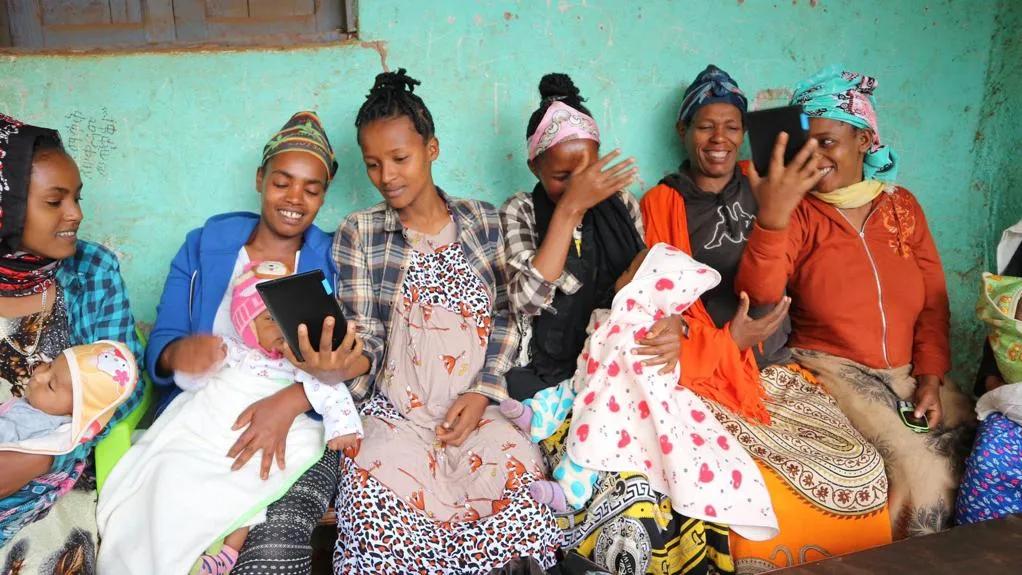
In the first phase, a cohort of 101 women (made up of 21 women experiencing their first pregnancy, 33 women who had already been pregnant once or several times before, and 47 women with a child under the age of 5) trialled the LUCY app. 66% of the group found that it provided reliable information, particularly on the stages of pregnancy when a visit to a health center is required, or on personalized recommendations relating to menstruation. In addition, the 93 health extension workers who received training all stated that they would use the app if it was available to them in their daily work. They also asked if an additional tool could be integrated into the app to identify high-risk pregnancies.
In a second step, the prototype was validated through feedback:
This initiative highlighted the app's importance for pregnant women and healthcare professionals, but also underscored the challenges for the organization in adapting the LUCY app for those who do not have regular access to smartphones or the internet.
Going forward, the consortium comprised of Nuru and the Health[e]Foundation aims to assess the app's impact with a larger group of women to better prepare for its scale-up in Ethiopia and potentially other countries in the sub-region.
Projects
Projects funded by FID
Peru
Democracy and Governance
Training newly-elected mayors to strengthen local governance in Peru

India
Democracy and Governance
Strengthening the political agency of women elected to local government in India

Mexico
Women-men equality
Changing perpetrators' behavior to prevent violence against women in Mexico